
Best Shoes for Diabetes: What Actually Protects a Diabetic Foot
Depth, seamless linings, removable insoles and no break-in. A foot and ankle surgeon on diabetic footwear, fitting rules and the Medicare benefit.
Written and medically reviewed by Dr. Tom Biernacki, DPM, FACFAS · Last reviewed 16 October 2026
We earn a commission if you buy through links on this page, including Amazon links paid by brand partners through Levanta, at no cost to you. As an Amazon Associate I earn from qualifying purchases. How we make money
On this page
- Quick answer: shoes for diabetes
- Start by knowing your risk category
- What a protective shoe actually does
- The Medicare therapeutic shoe benefit
- Fitting rules that matter more than the model
- Shoes that meet these requirements, and who should skip each
- Skip it if
- When to stop shopping and make an appointment
- What we can and cannot measure
- What the research actually supports — and where it stops
- Related guides & reviews
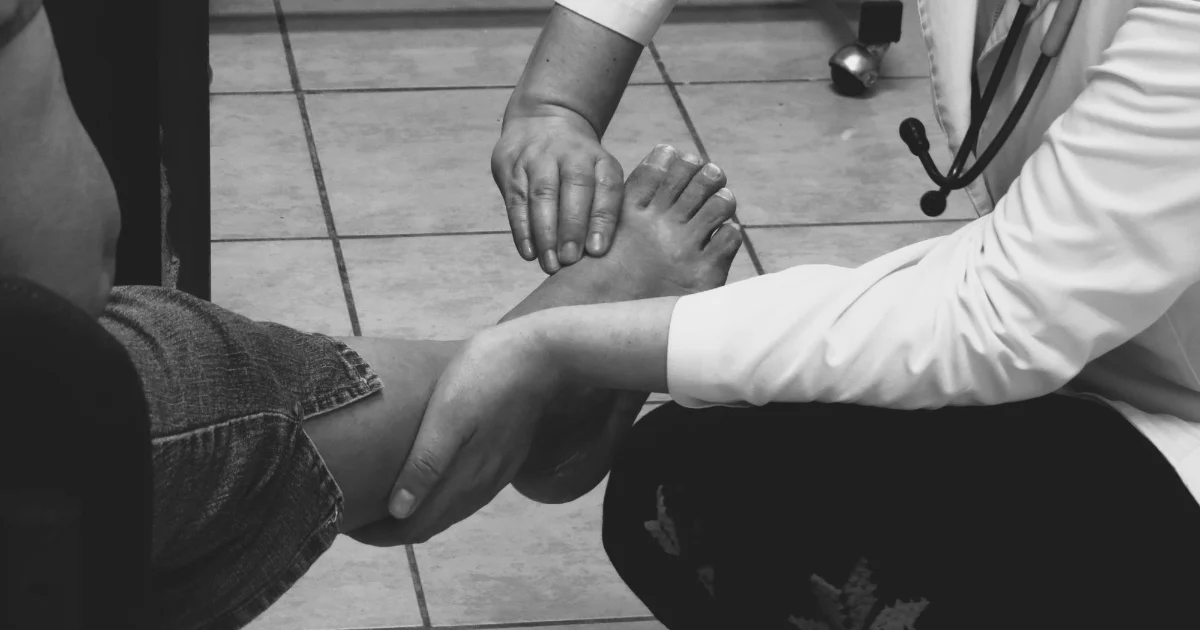
Read this first. Diabetic footwear is the one category where a buying guide is not enough on its own. If you have lost any feeling in your feet, have a foot deformity, or have ever had an ulcer, your shoes should be fitted by a podiatrist or certified fitter, not chosen from a web page — including this one. What follows explains what a good diabetic shoe does and what to check, so that you can have a better conversation and recognise a bad shoe when you see one.
Start by knowing your risk category
“Diabetic shoes” is not one thing, because diabetes affects feet very differently from person to person. What you need depends almost entirely on whether you still have protective sensation.
- Diabetes, normal sensation, normal foot shape. Your requirements are close to anyone else’s: a well-fitting, comfortable, supportive shoe. You have a working alarm system — if something rubs, you feel it and take the shoe off. Ordinary good footwear is fine.
- Peripheral neuropathy — reduced or absent feeling. This changes everything. The alarm system is off. A seam, a wrinkled sock or a small stone can cause a wound you will not notice for days. Footwear moves from comfort to protection, and professional fitting is genuinely indicated.
- Neuropathy plus deformity, callus, or a previous ulcer. Highest risk. This group needs prescription footwear and custom insoles, reviewed regularly. A buying guide is the wrong tool.
If you do not know which group you are in, that is the first thing to find out — a sensation check takes a couple of minutes in a clinic.
What a protective shoe actually does
1. Extra depth
The defining feature of a true diabetic shoe. Additional vertical room does two jobs: it accommodates clawed or hammered toes without pressing on their tops, and it leaves space for a custom insole without pushing the foot up into the toe box. A standard-depth shoe with a thick insert is a shoe that has become too tight.
2. A seamless interior
Run your hand inside the shoe, right into the toe. You are feeling for seams, stitching, glue ridges and the edges of overlays. Anything you can feel with a hand can create a pressure point on a foot that cannot feel it. Good diabetic shoes are built with smooth, padded, seam-free linings for exactly this reason.
3. A toe box that touches nothing
Width and depth both. Take the insole out, stand on it, and look at whether your foot overhangs the edges. Then check that nothing presses on the tops of the toes. The wide toe box guide covers how to measure your own forefoot so you know what you are asking for.
4. A removable insole
So that a custom orthotic or a prescribed accommodative insert can go in. If the footbed is glued down, the shoe cannot take a device, which rules it out for anyone who needs one.
5. A firm heel counter and a rocker
A firm heel counter holds the foot back in the shoe so it does not slide forward and jam the toes. A rocker sole reduces peak pressure under the forefoot — the commonest site of diabetic ulceration — by rolling you through the step instead of pressing through the ball of the foot.
The Medicare therapeutic shoe benefit
In the United States, Medicare Part B covers one pair of therapeutic shoes and a set of inserts per calendar year for people with diabetes who meet specific criteria — typically a history of ulceration, deformity, callus, neuropathy with evidence of pressure, poor circulation, or amputation. It requires certification from the doctor treating your diabetes and a prescription from a qualified provider.
This is worth raising at your next appointment. A great many people who qualify never hear about it and buy unsuitable shoes at retail instead. Coverage rules change, so confirm the current requirements with your provider rather than taking a web page’s word for it.
Fitting rules that matter more than the model
- Be measured, both feet, standing. Feet change shape over years and most people are wearing the size they were twenty years ago. Fit the larger foot.
- Shop late in the day. Feet swell. A shoe fitted at 9 a.m. can be tight by evening.
- There is no break-in period. This is the rule people most often ignore. A shoe that needs breaking in is a shoe rubbing something. On an insensate foot, that is how ulcers start. It must be comfortable immediately.
- Introduce new shoes gradually anyway. An hour on the first day, then inspect your feet. Look for redness that does not fade within twenty minutes. Build up over a week or two.
- Check inside the shoe before every wear. Hand right in, feeling for stones, folded insoles, or anything that has worked loose.
- Never barefoot, indoors or out. Most household foot injuries in neuropathy happen at home. A supportive indoor shoe matters as much as the outdoor pair — see the indoor footwear guide for what a good one looks like, with the caveat that open-backed styles are not appropriate here.
- Wear the socks you will actually use when fitting, and choose seam-free, non-constricting, moisture-wicking ones.
Shoes that meet these requirements, and who should skip each
Before you buy anything: if you qualify for the therapeutic shoe benefit described above, use it. It covers a fitted pair and inserts, supplied by someone who measures your feet and checks the fit — which is worth more than any model choice on this page. What follows is for people who do not qualify, or who need a second pair. Nothing here has been under our own caliper, and no shoe prevents an ulcer; fit and daily foot checks do.
Orthofeet — the most consistently seamless interior
Built around the two features that matter most here: an interior with no seams over the toes or forefoot, and enough depth to take a prescribed insert once the factory one is removed. The wide and extra-wide fittings are genuinely wide rather than a relaxed standard, which matters when the goal is a shoe that never presses anywhere. For someone with neuropathy buying without a fitter, this is the range that most reliably avoids the rub you would not feel. The catch, for a foot with calluses or an old ulcer under the ball, is the heel: every Orthofeet we checked that publishes a drop sets it 13.5 to 17.4 mm above the forefoot, which shifts pressure forward. Our Orthofeet guide has the model-by-model figures.
Skip it if: you have significant deformity — a Charcot foot, a rigid claw toe, a partial amputation. Off-the-shelf depth is not accommodation, and those feet need a custom-moulded shoe rather than a wide one.
Propet — extra depth in a wide size range
The other mainstream maker producing genuine extra-depth shoes across a broad width range, including sizes that are hard to find elsewhere. Removable insoles throughout, so a prescribed insert drops in without lifting the heel out of the shoe, and the closures are mostly hook-and-loop, which is the right answer for anyone who cannot comfortably reach their own laces.
Skip it if: your feet are a straightforward width and you have no neuropathy or deformity — you would be buying accommodation you do not need, and a well-fitted mainstream walking shoe will be lighter and more comfortable.
New Balance 928 — the mainstream option with real widths
Worth naming because a great many people with diabetes have no neuropathy, no deformity and no ulcer history, and for them the requirement is simply a well-made, supportive shoe in the correct width with a removable insole. The 928 is a motion-control walking shoe available up to 6E, it looks like an ordinary shoe rather than a medical one, and the insole lifts straight out for an insert.
Skip it if: you have lost protective sensation. This is a conventional shoe with conventional seams, and a shoe you cannot feel needs a seamless interior and a fitter, not a wider size.
Seamless diabetic socks — cheaper than shoes and often more useful
An ordinary sock has a toe seam, and that seam sits directly over the part of the foot most likely to blister. Seamless, non-binding socks in a light colour cost very little and remove one of the commonest sources of friction — and the light colour is deliberate, because it shows drainage or blood immediately, which is how a problem gets found on day one rather than day ten.
Skip it if: nothing — for anyone with neuropathy these are the cheapest worthwhile purchase on this page. Just avoid anything with elastic that leaves a mark at the ankle.
Skip it if
- It is open-toed, backless, or a flip-flop. No protection, and a thong between the toes on an insensate foot is a genuine hazard.
- You can feel seams inside. Whatever your hand feels, your foot will meet.
- It needs breaking in. Non-negotiable.
- The footbed is glued in and you have been prescribed a device. The shoe cannot do its job.
- It is a “diabetic sock” or “diabetic shoe” sold online on the strength of the label alone. The term is not regulated in the way people assume. Depth, seams and fit are what matter, not the word on the box.
When to stop shopping and make an appointment
Same day, not next week, if you find any of these: a break in the skin anywhere on the foot; redness, warmth or swelling in one area; a callus with dark discolouration or bleeding underneath it; drainage or an odour; a change in the shape of the foot; or new numbness, burning or tingling.
A foot wound in diabetes is time-sensitive in a way that most foot problems are not, and small things become serious quickly when sensation is reduced. Nothing on this page substitutes for having someone look at it.
What we can and cannot measure
Our protocol measures internal toe-box width and depth with calipers, weighs the pair, records stack height and rocker geometry, and gives an Orthotic Volume Rating for whether a custom device fits once the stock insole is out. Those numbers are directly relevant here — depth and volume are exactly what a diabetic shoe is judged on. What we cannot do from a bench is assess your foot, your sensation or your pressure map. That part is a clinic job, and for this condition it is the part that matters most.
This page is general information, not medical advice, and does not replace assessment by a clinician who has examined your feet.
What the research actually supports — and where it stops
Everything above this heading is clinical reasoning. This is the part with published evidence behind it, and the part that is still judgement.
Most footwear advice for diabetes gets repeated rather than tested. The most useful synthesis available went looking specifically for design features rather than brands: a systematic review by Ahmed, Barwick, Butterworth and Nancarrow, published open access in the Journal of Foot and Ankle Research in 2020.
- Rocker soles have the strongest support of any design feature. The review graded the evidence for rocker soles reducing peak plantar pressure as strong — the highest grade it gave anything. It is also the feature most often missing from a shoe sold on the strength of the word “diabetic”.
- Custom insoles offload the forefoot; the grading here is moderate. Note what that sentence does and does not say: the evidence is for a device made to the shape of the foot, not for a soft liner. A high degree of contact between the insole and the sole of the foot is what reduces pressure, and cushioning alone does not create contact.
- The metatarsal domes used in these studies had real dimensions, not just a rule of thumb. Across the pooled studies they were 5–11 mm high, 66–74 mm long and 51–63 mm wide, placed 5–10.6 mm behind the metatarsal heads. That is the difference between “just behind the ball of the foot” and a measurement you can check.
And here is the part no product page quotes. The authors are explicit that most of the studies they found measured a reduction in plantar pressure rather than whether an ulcer actually occurred, and that there is limited evidence to inform footwear and insole prescription in this group. Six of the studies looked at ulcers coming back. None looked at a first ulcer at all. So pressure reduction is well demonstrated, ulcer prevention is inferred from it, and if you have never had one there is no trial that tells you which shoe keeps it that way. That is not a reason to ignore these features — they are still the best-evidenced things to look for. It is a reason to treat them as the strongest available reasoning rather than as proof, and to keep up the daily skin check and the appointments your team asks for.
On the recurrence half, there is better evidence now than that review had to work with. In 2026 Behnam Amini, Hanieh Salehi-Pourmehr and Sevil Ghaffarzadehrad published a systematic review of randomised trials in the Journal of Foot and Ankle Research asking which type of orthosis actually keeps a diabetic foot ulcer from coming back — 10 RCTs and 1,686 participants. Custom devices came out ahead. The clearest single result is from the CareFUL trial (Ulbrecht and colleagues, 2014, 130 people): ulcers came back in 9.1% of those given insoles shaped to the foot and to its pressure map, against 25.0% with standard diabetic inserts. (The review quotes this as 9.9% and credits it to a different trial; we went back to both papers.) The largest custom-footwear trial (Bus and colleagues, 2013, 171 people) found no overall difference, 38.8% against 44.2%, but among people who actually wore the shoes as recommended, recurrence fell from 47.8% to 25.7%. Wearing them is the treatment. The authors deliberately stop short of pooling everything into one number, and they explain why — the trials used too many different orthosis types and follow-up lengths to combine honestly, so this is a narrative synthesis rather than a meta-analysis. Read alongside the pressure evidence above, the two reviews say something fairly clear. If you have already had an ulcer, a properly made custom device has actual trial evidence behind it. If you have not, nobody has run that trial yet — which is the same gap the first review named, now filled on one side only.
- Amini B, Salehi-Pourmehr H, Ghaffarzadehrad S. Comparing the Effectiveness of Different Types of Orthoses in Preventing Diabetic Foot Ulcer Recurrence: A Systematic Review of Randomized Clinical Trials. Journal of Foot and Ankle Research 2026;19(3):e70192. doi:10.1002/jfa2.70192
- Ahmed S, Barwick A, Butterworth P, Nancarrow S. Footwear and insole design features that reduce neuropathic plantar forefoot ulcer risk in people with diabetes: a systematic literature review. Journal of Foot and Ankle Research 2020;13:30. doi:10.1186/s13047-020-00400-4 — open access.
Recently reviewed
Individual shoe pages state their evidence tier, published measurements and who should skip them.
Saucony Endorphin Speed 5
Spec AnalysisLight plated neutral trainer. Saucony publishes both stack heights and they match its 8 mm drop — not yet tested.
HOKA Mach 6
Spec AnalysisLower, firmer neutral HOKA. HOKA publishes a 5 mm drop and neither stack height — not yet tested.
ASICS Novablast 5
Spec AnalysisBouncy high-stack neutral. ASICS publishes an 8 mm drop and neither stack height — not yet tested.
Our funding and evidence policy
We earn affiliate commissions from qualifying purchases. Our policy is to assess published evidence and fit needs rather than rank products by commission rate. Current reviews are specification analyses; see our method for their limits.