
Best Shoes for Neuropathy: A Foot Surgeon’s Guide (2026)
A foot and ankle surgeon on shoes for neuropathy: protection over correction — seamless interiors, extra depth and no pressure points on a numb foot.
Written and medically reviewed by Dr. Tom Biernacki, DPM, FACFAS · Last reviewed 16 October 2026
We earn a commission if you buy through links on this page, including Amazon links paid by brand partners through Levanta, at no cost to you. As an Amazon Associate I earn from qualifying purchases. How we make money
On this page
- The short answer
- Why the usual advice does not apply
- What to look for
- How to fit them
- The daily check that matters more than the shoe
- Coverage most people are not told about
- Who should not be buying retail shoes at all
- A podiatrist’s picks for neuropathy
- The numbers, side by side
- What the research actually supports — and where it stops
- Frequently asked questions
- What we are testing next
- Related guides & shoe pages
Testing status: the criteria on this page are clinical. The shoes that meet them have not yet completed our measurement protocol — internal toe-box width and depth, seam mapping and the Orthotic Volume Rating are measured on every pair we test. See How We Test. Nothing here carries a score or the seal.
The short answer
When you have neuropathy you are not buying a comfortable shoe. You are buying protection you will not be able to feel working. That single fact reverses most normal shoe-shopping advice. A shoe that feels snug and supportive is a warning sign, not a recommendation, because the foot that cannot report pressure cannot tell you it is being damaged.
What you want: a seamless interior, extra depth, a toe box wide and tall enough that nothing touches the tops or ends of the toes, a removable footbed, a firm heel counter, and a sole that protects against what you step on. What you do not want: anything that has to be broken in.

Why the usual advice does not apply
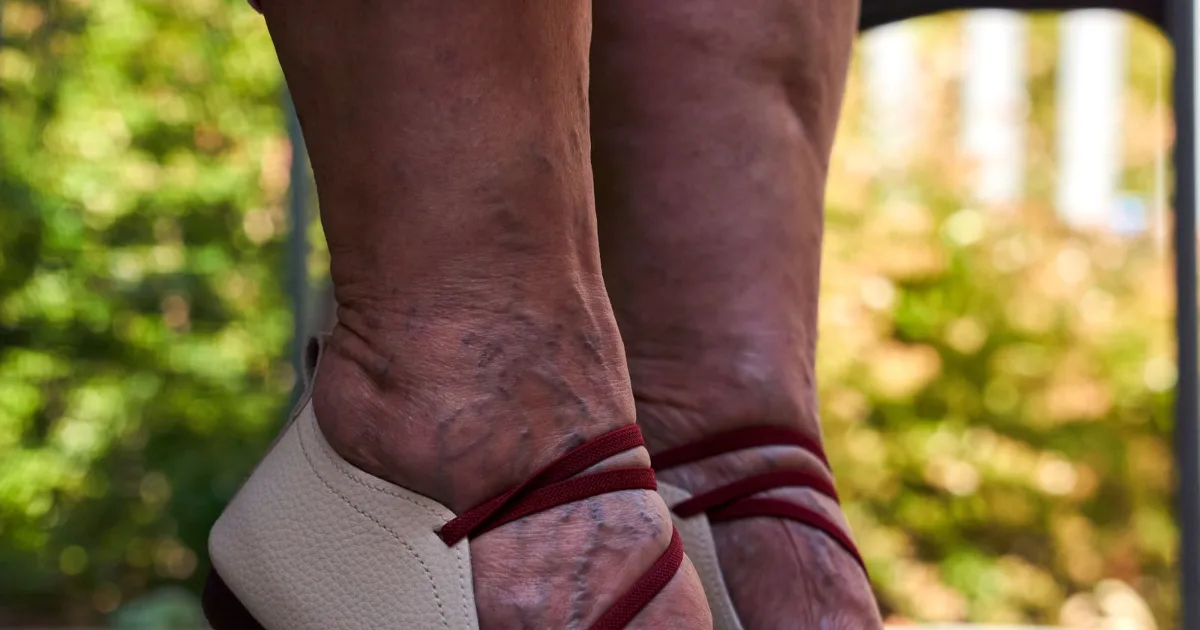
In a foot with normal sensation, pain is the alarm. A seam rubs, you feel it, you change shoes, and nothing happens. Peripheral neuropathy removes the alarm while leaving the mechanism intact. The rubbing still happens; the skin still breaks down; you simply do not find out until you look.
This is why the great majority of foot ulcers in people with diabetes begin with footwear, and why the single most useful thing on this page is not a product feature at all — it is looking at your feet every day.
Two corollaries follow, and both matter more than any brand:
- “It feels fine” is not evidence. The fit test has to be visual and manual, not sensory.
- There is no break-in period. A shoe that needs breaking in is a shoe that is rubbing. In a neuropathic foot, breaking in is the injury.
What to look for
A seamless interior
Run your hand right around the inside of the shoe, front to back, and along the toe box. Any raised seam, stitched overlay or glued edge that you can feel with your hand is a pressure point that your foot will not report. Purpose-built therapeutic shoes are made with smooth, padded, seam-free linings for exactly this reason.
Depth, not just width
“Extra depth” is the term of art, and it means vertical room in the toe box. It matters because clawed or hammered toes rub on the top of the shoe, and because depth is what lets a protective insole go in without stealing the room your toes need. A wide shoe with a shallow toe box solves nothing.
A toe box that does not touch anything
Stand up in the shoe. There should be a thumb’s width beyond the longest toe, nothing pressing on the tops of the toes, and no squeeze across the ball of the foot. If you have a bunion or a prominent joint, the upper over it should be soft and stretchable — see wide toe box shoes.
A removable footbed
You need to be able to take the stock insole out, both to make room for a protective or prescribed insert and to inspect it. The insole is a useful record: wear patterns and dark spots show you where load is concentrating.
A firm heel counter and a stable platform
Neuropathy frequently affects balance as well as sensation. A collapsing heel counter or a narrow platform makes an already less stable person less stable. Squeeze the back of the shoe — it should resist.
A protective sole
You may not feel what you step on. A sole with real thickness and puncture resistance is doing a job here that it does not have to do for other people. This is also why the rule is no barefoot walking, indoors or out, and why house shoes matter as much as outdoor ones.
Closures you can manage
Laces adjust best across a day of swelling. But if reaching your feet is difficult, or your hands are affected too, a wide hook-and-loop strap you can actually operate beats a lace you cannot. The best closure is the one you will use properly.
How to fit them
- Get both feet measured, standing, every time. Length, width and instep. Feet change, and neuropathy often comes with changes in shape.
- Fit the larger foot. Then pad out the smaller one if needed. Never split the difference.
- Shop late in the day, when your feet are at their largest.
- Wear the socks you will actually wear. Seamless, non-binding at the top, and light-coloured so any drainage shows immediately.
- Do the outline test at home. Stand on paper, trace your foot, cut it out, and slide it into the shoe. If the paper buckles anywhere, the shoe is narrower or shorter than your foot. This works when sensation does not.
- Wear new shoes for an hour, then take them off and look. Any redness that has not faded within about twenty minutes is a pressure point. Return them.
The daily check that matters more than the shoe
Look at your feet every day, in good light — tops, soles, heels and between every toe. Use a mirror on the floor or a long-handled mirror if you cannot lift the foot to see it, or ask someone. You are looking for redness, blisters, cracks, dark areas, drainage, and anything that was not there yesterday.
Check the inside of each shoe with your hand before you put it on, every time. Pebbles, folded socks, a lifted insole edge and, occasionally, objects that got in during the day are all common causes of injury that a neuropathic foot will not report.
Contact your care team the same day if you find an open area, a blister, redness that does not fade, drainage, or a foot that is newly warm, red and swollen. That last combination in particular needs urgent assessment.
Coverage most people are not told about
In the United States, the Medicare Therapeutic Shoe Bill covers footwear for people with diabetes who meet specific criteria — typically one pair of depth shoes and several pairs of custom inserts per calendar year, or custom-moulded shoes where a standard depth shoe cannot be fitted. It requires certification by the physician managing your diabetes and a prescription from a qualifying clinician, and it is chronically underused because patients are never told it exists.
If you have diabetes and any history of ulceration, deformity, callus, poor circulation or amputation, ask your doctor whether you qualify. Specifics change, so confirm current requirements with your clinician or plan rather than with an article.
Who should not be buying retail shoes at all
Every guide on this site names the people a product is wrong for. Here, that list is more important than usual:
- Anyone with an open ulcer or a wound. That is treated with an offloading device — a total contact cast, a removable walker, or a prescribed modification — not a retail shoe. Buying a better shoe instead of getting a wound treated costs people feet.
- Anyone with a foot that is newly red, warm and swollen without an obvious injury. This can be Charcot neuroarthropathy, and it is a medical emergency for the foot. Do not wait to see whether new shoes help.
- Anyone with significant deformity — a collapsed midfoot, rigid clawed toes, a previous partial amputation. Those feet need custom-moulded footwear, not an off-the-shelf shoe in a bigger size.
- Anyone with poor circulation and a new area of skin breakdown. Vascular assessment comes first.
None of this is medical advice for your particular foot, and nothing here replaces an examination. If you have neuropathy and you have not had your feet checked in the past year, that appointment does more for you than any purchase on this page.
A podiatrist’s picks for neuropathy
These are the models already in our review library that meet the criteria above. None of them has completed the full measurement protocol yet, so none carries a score or the Podiatrist Tested seal — each links to its published specification analysis, where every figure is attributed to the brand that published it. How we test.
Disclosure: the Amazon links in this section are paid links. If you buy through one, Amazon pays us a commission at no extra cost to you. Commissions never influence which shoes appear here, their order, a score or the seal — see our independence policy.
HOKA Bondi 9
Maximum cushioning and a smooth interior. With reduced protective sensation the priority is lowering peak pressure and avoiding seams that can rub without you feeling it.
KURU ATOM 2
Offered in 2E and 4E for men, and the fitting is where its room comes from: in a standard width a lab measured 70.7 mm at the big toe, below the middle of the 34 shoes we hold figures for, and the shallowest toe box of them all. Check the depth over your toes in the shop, because neuropathy means you may not feel it.
HOKA Transport 2
A flatter, more shoe-like everyday option for people who will not wear a running shoe all day.
Brooks Addiction Walker 2
A structured walking shoe offered in extra widths — a common choice where an accommodating fit and a stable base are both needed.
The numbers, side by side
Here are the shoes named on this page with their published numbers beside each other — the comparison a shopper otherwise has to open six product pages to do.
| Shoe | Heel stack | Forefoot stack | Drop | Weight men’s, as published |
|---|---|---|---|---|
| HOKA Bondi 9 | 43 mm | 38 mm | 5 mm | 297 g |
| KURU ATOM 2 | 39.9 mm | 26 mm | 10 mm † | 371 g |
| HOKA Transport 2 | 38 mm | 26.8 mm | 5 mm † | 298 g |
| Brooks Addiction Walker 2 | 35.7 mm | 23.5 mm | — | 411 g |
Manufacturer-published figures unless that shoe’s own review names a different source. A dash means nobody publishes the figure; we do not estimate it. † stack measured by an independent lab, drop as published by the brand — which is exactly why the two do not agree. None of these are Podiatrist Tested measurements.
These are the figures the brands print. Where an independent lab has cut one in half, the measured drop has usually come out higher than the box says — mostly because the forefoot is thinner than claimed — while the zero-drop models measured within 2.2 mm of zero, which is what an honest zero looks like. One shoe so far has measured lower than stated, so read it as a tendency rather than a rule. The figures and the sources are on the heel-to-toe drop chart.
What the research actually supports — and where it stops
Everything above this heading is clinical reasoning. This is the part with published evidence behind it, and the part that is still judgement.
The evidence base for footwear in neuropathy is narrower than the marketing suggests, and it is worth knowing its shape. The closest thing to a map of it is a systematic review by Ahmed, Barwick, Butterworth and Nancarrow (Journal of Foot and Ankle Research, 2020, open access), which asked which footwear and insole design features reduce neuropathic forefoot ulcer risk. Its population is diabetic peripheral neuropathy, so it speaks directly to most readers of this page — if your neuropathy has another cause, the mechanical reasoning still applies but the studies were not done on you.
- Rocker soles have the strongest support of any design feature. The review graded the evidence for rocker soles reducing peak plantar pressure as strong — the highest grade it gave anything. It is also the feature most often missing from a shoe sold on the strength of the word “diabetic”.
- Custom insoles offload the forefoot; the grading here is moderate. Note what that sentence does and does not say: the evidence is for a device made to the shape of the foot, not for a soft liner. A high degree of contact between the insole and the sole of the foot is what reduces pressure, and cushioning alone does not create contact.
- The metatarsal domes used in these studies had real dimensions, not just a rule of thumb. Across the pooled studies they were 5–11 mm high, 66–74 mm long and 51–63 mm wide, placed 5–10.6 mm behind the metatarsal heads. That is the difference between “just behind the ball of the foot” and a measurement you can check.
And here is the part no product page quotes. The authors are explicit that most of the studies they found measured a reduction in plantar pressure rather than whether an ulcer actually occurred, and that there is limited evidence to inform footwear and insole prescription in this group. Six of the studies looked at ulcers coming back. None looked at a first ulcer at all. So pressure reduction is well demonstrated, ulcer prevention is inferred from it, and if you have never had one there is no trial that tells you which shoe keeps it that way. That is not a reason to ignore these features — they are still the best-evidenced things to look for. It is a reason to treat them as the strongest available reasoning rather than as proof, and to keep up the daily skin check and the appointments your team asks for.
- Ahmed S, Barwick A, Butterworth P, Nancarrow S. Footwear and insole design features that reduce neuropathic plantar forefoot ulcer risk in people with diabetes: a systematic literature review. Journal of Foot and Ankle Research 2020;13:30. doi:10.1186/s13047-020-00400-4 — open access.
Frequently asked questions
What kind of shoes are best for neuropathy?
Seamless-lined extra-depth shoes with a wide, tall toe box, a removable footbed, a firm heel counter and a protective sole. Purpose-built therapeutic footwear is designed around exactly this list; a well-chosen walking or running shoe with a genuinely seamless interior and enough depth can also work.
Should shoes for neuropathy be tight or loose?
Neither. Snug at the heel so the foot does not slide, and genuinely roomy at the front with nothing touching the toes. Tight is dangerous because you cannot feel it; sloppy is dangerous because sliding creates friction.
Are memory foam shoes good for neuropathy?
Soft cushioning feels reassuring but it is not the point, and very soft foam can worsen instability in someone whose balance is already affected. Protection, depth and a seam-free interior matter more than plushness.
Can I wear sandals or go barefoot at home?
Barefoot, no — most injuries happen at home. If you want an open shoe, choose one with a closed toe and a secured heel, and check the interior the same way. Most foot specialists will tell you to keep a dedicated pair of house shoes by the bed.
How often should I replace them?
Sooner than you would otherwise. The cushioning and the protective insert both flatten long before the upper looks worn, and a compressed insert is a shoe that stopped protecting you months ago. Every six to twelve months of daily wear is a reasonable expectation, and the insert usually needs changing more often than the shoe.
Do I need custom inserts or will over-the-counter ones do?
For a foot with reduced sensation, this is a decision to make with a clinician rather than alone. An off-the-shelf insert with a firm arch can concentrate pressure in a spot the foot will never complain about. Accommodative, pressure-distributing inserts are the goal, and where there is deformity or ulcer history they are usually prescribed.
What we are testing next
Therapeutic and extra-depth footwear sits in the testing queue alongside the running and walking categories. Because seam position and internal depth are the variables that matter most here and are almost never published, they are measured on every pair we test, and reported on the scorecard at Reviews.
Browse the full list: 4 assessed for neuropathy. Each page shows the published drop, stack, weight, widths and price side by side. Not sure which of them is you? Answer four questions and we will narrow it to two or three.
Reviews for Neuropathy
Individual shoe pages state their evidence tier, published measurements and who should skip them.
Orthofeet Coral
Spec AnalysisExtra depth, published quarter-inch removable insole, widths A to 4E depending on colour, 15.7 mm drop — not yet tested.
Altra Torin 9
Spec AnalysisZero-drop daily trainer with the widest toe box in the category — not yet tested.
Brooks Addiction Walker 2
Spec AnalysisMotion control, leather, four widths, high drop — not yet tested.
Our funding and evidence policy
We earn affiliate commissions from qualifying purchases. Our policy is to assess published evidence and fit needs rather than rank products by commission rate. Current reviews are specification analyses; see our method for their limits.