
Best Shoes for Flat Feet: A Foot Surgeon’s Guide (2026)
A foot & ankle surgeon on flat feet: the 10-second test for which kind you have, the three shoe structures that matter, and who should skip stability shoes.
Written and medically reviewed by Dr. Tom Biernacki, DPM, FACFAS · Last reviewed 16 October 2026
We earn a commission if you buy through links on this page, including Amazon links paid by brand partners through Levanta, at no cost to you. As an Amazon Associate I earn from qualifying purchases. How we make money
On this page
- The short answer
- First, work out which flat foot you have
- What a shoe can actually change
- The volume problem nobody mentions
- The thirty-second test to run in the store
- What to wear, by situation
- Who should skip the stability shoe
- A podiatrist’s picks for flat feet
- The numbers, side by side
- What the research actually supports — and where it stops
- Support inside the shoe, not just under it
- Frequently asked questions
- What we are testing next
- Related guides & shoe pages
Testing status: the categories and models named here meet the criteria described below, but have not yet completed our measurement protocol. Heel-counter stiffness, torsional rigidity and the Orthotic Volume Rating are measured on every pair we test — see How We Test. Nothing on this page carries a score or the seal.
The short answer
Model versions: Brooks has since released the Adrenaline GTS 25. The GTS 24 named below is the previous version, still sold and usually cheaper; our spec review covers what changed.
Most flat feet do not need a special shoe. The ones that do need three things: a heel counter stiff enough that it does not fold when you squeeze it, enough torsional rigidity through the midfoot that the shoe cannot be wrung out like a towel, and enough internal volume to take an insole once the stock one comes out. Arch height printed on a box is close to meaningless. What matters is whether the shoe resists the motion your foot is actually doing.
And one thing almost every buying guide gets wrong: more support is not better. A rigid motion-control shoe under a stiff, already-rigid flat foot is one of the more reliable ways to produce new pain on the outside of the foot.
Where to start
Seven places to start, drawn from the picks further down this page. None has been through our bench yet, so there are no scores here. A flexible flat foot with no pain may need none of them: see who should skip the stability shoe.
- Support without a wedge in the arch: HOKA Arahi 8Stability from a firmer frame around the heel rather than a medial post pressing into the arch.Women’s — check price Men’s — check price
- A foot that keeps collapsing through the step: HOKA Gaviota 6HOKA’s most structured stability model, on its widest platform.Women’s — check price Men’s — check price
- A broad flat foot: New Balance Fresh Foam X 860v15A posted stability trainer in wide and extra-wide; for a broad flat foot the width usually matters more than the post.Women’s — check price Men’s — check price
- A first stability shoe that does not feel tippy: ASICS GT-2000 15Mid-weight stability, lighter than the Kayano, on a mid-height heel.Women’s — check price Men’s — check price
- A flexible flat foot that dislikes a firm post: Saucony Guide 19Frame-based stability with a softer ride than the posted shoes.Women’s — check price Men’s — check price
- An arch that is tender to direct pressure: Brooks Adrenaline GTS 24GuideRails act at the heel and knee rather than under the arch.Men’s — check price
- Inside the shoe: PowerStep Pinnacle Maxx insoleBuilt for flat feet and overpronation: a firm shell, a deep cup and an angled heel that resists the inward roll.Check price — choose your size
Paid links: we earn a commission at no extra cost to you, and it never changes what is listed. The reasoning for each is in the full picks, and the figures are in the numbers side by side.

First, work out which flat foot you have
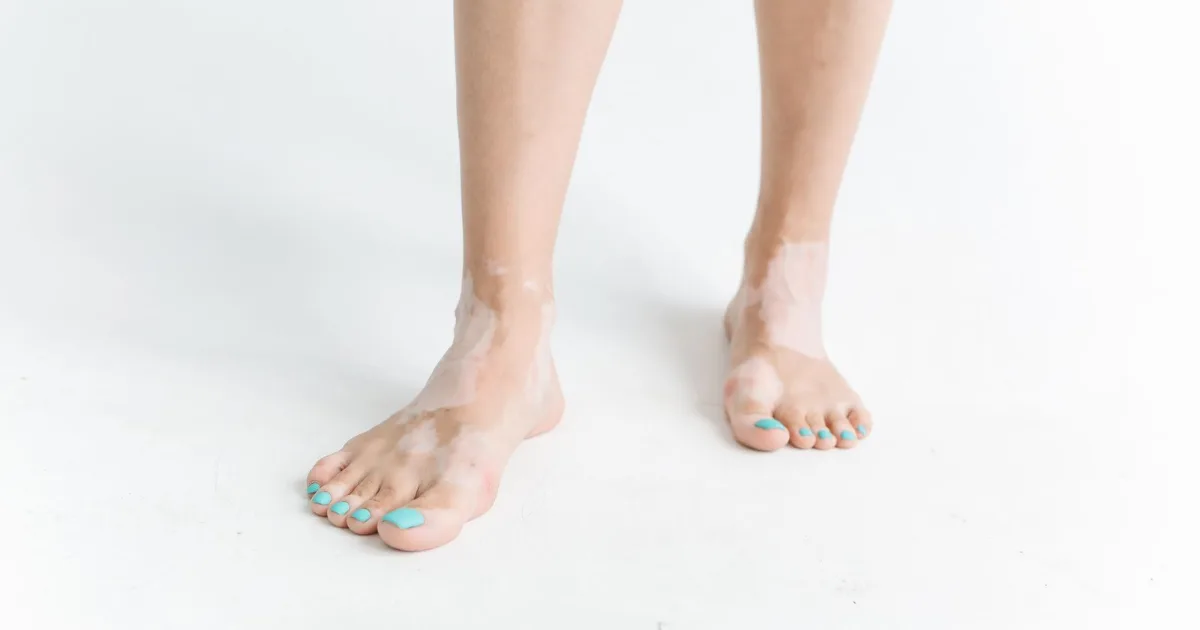
“Flat feet” describes an appearance, not a diagnosis, and the two common versions want opposite things from a shoe. You can separate them in about ten seconds.
The heel-rise test
Stand facing a wall, fingertips on it for balance. Rise onto the toes of both feet. Watch the inside of your foot.
- An arch appears and your heel swings inward. That is a flexible flat foot. The joints still move; a shoe or an insole has something to work with.
- The arch stays flat and the heel does not turn in. That is a rigid flat foot. Support will not restore an arch that is not there, and forcing one usually hurts. The goal shifts to cushioning, room, and even pressure.
The warning version
If the flattening is on one side only, is newer than the other foot, and there is aching or swelling just below and behind the bump on the inside of the ankle, that pattern points toward posterior tibial tendon dysfunction — now more often called progressive collapsing foot deformity. That is a condition that gets worse without treatment and it is not a footwear problem. Get it looked at. A good shoe helps in the meantime; it does not substitute for the appointment.
The bony-bump version
A third pattern is worth separating because it changes the fitting rather than the shoe category. If there is a distinct, tender lump on the inside of the arch — roughly a thumb’s width forward of and below the inner ankle bone — and the shoe’s inner upper or an arch support presses straight onto it, that is likely an accessory navicular, an extra bone sitting where the posterior tibial tendon attaches. It often accompanies a flat foot, so most of what follows still applies; the difference is that the support has to stop short of the bump instead of pressing into it.
The other one to know: if you have no pain, you may need nothing at all. A large share of the population has flat feet and no symptoms whatsoever, and there is no good evidence that treating a painless flat foot prevents future problems. Buy for comfort and get on with your day.
What a shoe can actually change
A shoe cannot rebuild an arch. What it can do is resist the specific motions that load the tissues that hurt — and it does that through three structures.
1. The heel counter
The cup of stiff material wrapped around your heel. It is the single most important feature for a flexible flat foot, because the collapse starts at the heel: the heel rolls outward, and the arch follows it down. A counter that holds keeps the whole chain higher. Pinch the back of the shoe between thumb and forefinger. If the sides meet with light pressure, that shoe is not going to hold a foot that needs holding.
2. Torsional rigidity through the midfoot
Hold the heel in one hand and the forefoot in the other and twist them in opposite directions. A shoe for a collapsing foot should resist — you should feel it fight back through the middle. A shoe that twists freely lets the midfoot unwind under load, which is exactly the motion you are trying to limit. RunRepeat’s lab has since twisted 24 of the shoes we review, and the label on the box was a weak guide: the stability ASICS Gel-Kayano 32 and HOKA Arahi 8 were among the hardest to twist, the stability Saucony Guide 19 among the easiest. See how all 22 compare.
3. Midsole geometry, not a magic wedge
Older stability shoes used a firm wedge of foam under the arch, the “medial post”. Most current designs have moved to broader platforms, raised sidewalls and dual-density foams that guide the foot rather than block it. In clinic the practical difference is that the newer geometry-based approach is far more comfortable for people who found traditional posts intrusive, and it fails more gracefully when the shoe is not quite right for you.
What does not matter as much as the internet suggests: heel-to-toe drop, arch “height” claims, and brand loyalty. Two shoes from the same brand can sit on opposite ends of this spectrum.
The volume problem nobody mentions
If you wear an orthotic — custom or over-the-counter — the shoe has a second job: fitting the device. A shoe with a glued-in footbed, a shallow heel, or a low-volume upper will not take an orthotic no matter how supportive it is on paper, and the orthotic ends up raising your heel out of the counter and undoing the support you bought the shoe for.
This is the number we measure that nobody else publishes. The Orthotic Volume Rating is a 1–5 score for how well a real custom orthotic fits once the stock insole is removed. Before we have measured your candidate shoe, do the manual version: pull the stock insole out. If it does not lift out, the shoe is a poor orthotic host. If it does, drop your orthotic in, put the shoe on, and check that your heel still sits down inside the counter rather than perched on top of it.
The thirty-second test to run in the store
- Squeeze the heel counter. Firm resistance, not a collapse.
- Twist the shoe. It should resist through the midfoot. Some give at the forefoot is fine and normal.
- Bend it. It should flex at the ball of the foot, where your toes bend — not in the middle of the arch.
- Pull the insole out. Does it come? Is there depth underneath?
- Stand on one leg. If you feel like you are rolling in over the edge of the shoe, the platform is too narrow for you.
A shoe that passes all five is a candidate regardless of what the marketing calls it.
What to wear, by situation
Walking, standing and work
This is where flat feet cause most of their trouble, because the load is long and unbroken. Look for a stability-category shoe with a genuinely firm counter and a wide platform. If your workplace allows a running shoe, wear a running shoe — they are better built for this than most dedicated “work” shoes. See best shoes for standing all day.
Running
Comfort and actual fit are useful starting points, but arch shape or medial shin/arch pain does not by itself prescribe a stability shoe. The 2022 Cochrane review found very low-certainty evidence for stability versus neutral/cushioned running shoes; posture-based prescribing probably made little or no difference in the included military trials. A 2025 secondary analysis in 527 leisure-time runners associated greater perceived cushioning and global appreciation with lower injury risk, without establishing causality or a best shoe for every flat foot. Persistent symptoms need individual assessment rather than a category choice based only on their location.
For a running-specific version of this advice — the flexible-versus-rigid test, the two shoe features that actually control overpronation, and stability picks by use case — see our guide to the best running shoes for flat feet.
Around the house
The most underrated fix on this page. A flexible flat foot that is well supported for ten hours and then barefoot on tile for four is getting a very mixed message. A supportive slide or a house-only pair of shoes does more for morning arch pain than most upgrades to the work shoe.
Dress shoes
Accept the compromise and shorten the exposure. Look for a leather sole with a real shank, a closed heel that grips, and enough depth to take a slim orthotic. Change out of them for the commute.
Who should skip the stability shoe
Every review on this site names the people a product is wrong for. For the stability category, that is:
- Rigid flat feet. If no arch appears on heel rise, structured support tends to concentrate pressure rather than distribute it. Cushioning, width and depth serve you better. The commonest structural reason a flat foot is rigid is a tarsal coalition, which is routinely diagnosed as an ordinary flat foot and wants a different shoe entirely.
- Anyone with pain on the outside of the foot. Lateral column pain is often a sign the foot is being pushed off the medial support and onto its outer edge. More support makes it worse.
- People who have never had symptoms. A flat foot that does not hurt is not a problem to solve.
- Anyone whose flattening is new, one-sided and painful. That needs an examination first, not a purchase.
A podiatrist’s picks for flat feet
These are the models already in our review library that meet the criteria above. None of them has completed the full measurement protocol yet, so none carries a score or the Podiatrist Tested seal — each links to its published specification analysis, where every figure is attributed to the brand that published it. How we test.
Disclosure: the Amazon links in this section are paid links. If you buy through one, Amazon pays us a commission at no extra cost to you. Commissions never influence which shoes appear here, their order, a score or the seal — see our independence policy.
HOKA Arahi 8
Stability built into a firmer frame around the heel rather than a traditional medial post, so the support is structural rather than a wedge pressing into the arch. A lab found it the third-hardest to twist of the 24 shoes we review, 19.5 Nm.
HOKA Gaviota 6
HOKA’s most structured stability model, on their widest platform — aimed at a foot that keeps collapsing through late stance rather than one that just rolls in slightly.
New Balance Fresh Foam X 860v15
A long-running posted stability trainer, and one of the few offered in both wide and extra-wide. For a broad flat foot the width option usually matters more than the post.
ASICS GT-2000 15
Mid-weight stability, and lighter than the Kayano: 252 g in the lab. The lab measured 38.2 mm under the heel, about the median of the shoes we review, so it is no longer the low option it once was; it twisted at 14.8 Nm, just over the median of the 24 it has twisted.
Saucony Guide 19
Frame-based stability with a softer ride than the posted shoes, which flexible flat feet often tolerate better than a firm medial post. A lab found it one of the easiest to twist of the 24 shoes we review, 10.7 Nm, so it suits a flat foot that rolls in a little, not one that keeps collapsing.
Brooks Adrenaline GTS 24
GuideRails act at the heel and knee rather than under the arch, so it suits people whose arch is tender to direct pressure.
The numbers, side by side
Here are the shoes named on this page with their published numbers beside each other — the comparison a shopper otherwise has to open six product pages to do.
| Shoe | Heel stack | Forefoot stack | Drop | Weight men’s, as published |
|---|---|---|---|---|
| HOKA Arahi 8 | 39 mm | 31 mm | 8 mm | 278 g |
| HOKA Gaviota 6 | 39 mm | 33 mm | 6 mm | 291 g |
| New Balance Fresh Foam X 860v15 | 43 mm | 35 mm | 8 mm | 331 g |
| ASICS GT-2000 15 | 40 mm | 32 mm | 8 mm | 252 g |
| Saucony Guide 19 | 37 mm | 31 mm | 6 mm | — |
| Brooks Adrenaline GTS 24 | 39 mm | 27 mm | 12 mm | 283 g |
| Brooks Beast GTS 26 (Ariel GTS 26) | 38 mm | 28 mm | 10 mm | 357 g |
Compared head-to-head: Brooks Beast GTS 26 vs Adrenaline GTS 24 — what the step up to a motion-control build actually changes, for the flatter foot that has outgrown a standard stability shoe.
Compared head-to-head: New Balance 860v15 vs Brooks Adrenaline GTS 24 — the two most commonly recommended stability trainers, set against each other on measured figures rather than marketing language.
Manufacturer-published figures unless that shoe’s own review names a different source. A dash means nobody publishes the figure; we do not estimate it. None of these are Podiatrist Tested measurements.
These are the figures the brands print. Where an independent lab has cut one in half, the measured drop has usually come out higher than the box says — by up to 6.2 mm, mostly because the forefoot is thinner than claimed — while the zero-drop models measured within 2.2 mm of zero. One shoe so far has measured lower than stated, so read it as a tendency rather than a rule. The figures and the sources are on the heel-to-toe drop chart.
What the research actually supports — and where it stops
Everything above this heading is clinical reasoning. This is the part with published evidence behind it, and the part that is still judgement.
Flat feet attract more confident advice than almost any other foot shape, so it is worth being precise about what has actually been tested. The most relevant synthesis is a systematic review and meta-analysis by Oerlemans and colleagues, published open access in BMC Musculoskeletal Disorders in 2023, which pooled the trials of foot orthoses for flexible flatfeet and looked at what patients themselves reported.
- If the flat foot hurts, the direction of effect favours a device. Pooling the adult trials, pain at rest and pain while walking both improved significantly more with orthoses than without. Pain while running did not reach significance. In children, three of the four trials in symptomatic feet favoured orthoses.
- If the flat foot does not hurt, the one study that looked found nothing. The single trial that included children with non-symptomatic flat feet showed no difference between orthoses and control. A flat arch on its own was not a reason to treat it.
- Custom devices did not beat off-the-shelf ones. The review reports no meaningful difference in effectiveness between custom-made and prefabricated orthoses — which is not what the price gap implies, and is worth knowing before you spend.
Now the honest part, and it is blunter than most sites will print. This is a small literature — nine studies, 353 children and 268 adults — with considerable heterogeneity between them, a very broad prediction interval, and a GRADE certainty for pain rated low. The authors’ own conclusion is that because of that heterogeneity they cannot conclude foot orthoses are useful for flexible flatfoot in children and adults. Read that as it is written: the signal points the right way for painful flat feet, and the evidence is not strong enough to promise you an outcome.
- Oerlemans LNMT, Peeters CMM, Munnik-Hagewoud R, Nijholt IM, Witlox A, Verheyen CCPM. Foot orthoses for flexible flatfeet in children and adults: a systematic review and meta-analysis of patient-reported outcomes. BMC Musculoskeletal Disorders 2023;24:16. doi:10.1186/s12891-022-06044-8 — open access.
Support inside the shoe, not just under it
A supportive shoe and a supportive insole are two different levers, and a flat foot in a soft shoe usually needs both. The PowerStep Pinnacle Maxx (paid link) is built explicitly for flat feet and overpronation — a firm shell, a deep cup and an angled heel that resists the inward roll. About $55; pick your size on the listing.
The limit worth stating plainly: an insole does not raise an arch and does not change bone alignment. It changes how load is spread across a foot that is going to stay the shape it is. That is often enough to make a long day tolerable, and it is not a correction.
Frequently asked questions
Do flat feet need arch support?
Only if they hurt, and only if the arch still moves. A flexible, symptomatic flat foot usually responds well to a firm heel counter plus an insole with a deep heel cup. A rigid flat foot and a painless flat foot generally do not need arch support at all.
Are stability or motion-control shoes better for flat feet?
Stability, for almost everyone. True motion-control shoes are a small, very rigid category built for a narrow set of feet, and they are prescribed far more often than they are needed. Start with stability, and only move firmer if a specific symptom demands it.
Do I need custom orthotics or will over-the-counter insoles work?
Plenty of flexible flat feet do well on a good over-the-counter insole, and the honest advice is to try one first. Custom devices earn their cost when the foot is asymmetric, when there is a fixed deformity to accommodate, when off-the-shelf shapes have already failed, or when the diagnosis is progressive collapsing foot deformity. See CURREX vs PowerStep for how the common over-the-counter shapes differ.
Can flat feet be corrected with shoes?
No. Shoes and insoles change how load passes through the foot, and that is often enough to stop the pain — but the bone and joint architecture does not change because of what you put on it. Anyone promising arch restoration from a shoe is selling something.
Why do my flat feet hurt more in summer?
Sandals, and barefoot time on hard floors. The shoe that was holding your heel all winter comes off. If summer reliably brings arch or heel pain, that is the strongest evidence you will get that the support was doing real work.
How long should it take for a new shoe to help?
Two to three weeks of consistent wear. If a shoe is going to help, you usually feel the direction of travel inside a week; if you are four weeks in with no change, the shoe is not the missing piece and it is worth having the foot examined.
What we are testing next
Stability shoes are near the front of the testing queue precisely because this category is where the gap between marketing language and measured behaviour is widest. When each pair has been measured and worn, its scorecard — weight, heel and forefoot stack, drop, internal toe-box width and depth, and the Orthotic Volume Rating — will publish at Reviews, and this guide will be updated the same week.
Compared head-to-head: HOKA Gaviota 6 vs Arahi 8 — the same support frame in two shoes, thirty dollars apart.
Browse the full list: 8 assessed for flat feet. Each page shows the published drop, stack, weight, widths and price side by side. Not sure which of them is you? Answer four questions and we will narrow it to two or three.
Reviews for Flat Feet
Individual shoe pages state their evidence tier, published measurements and who should skip them.
New Balance 928v3
Spec AnalysisLeather motion-control walking shoe, ROLLBAR post, ABZORB cushioning — not yet tested.
New Balance Fresh Foam X 1540v4
Spec AnalysisMade-in-USA motion control, ROLLBAR post, 4 mm drop, widths to 6E — not yet tested.
Altra Paradigm 8
Spec AnalysisZero-drop, wide toe box with a medial GuideRail — not yet tested.
Our funding and evidence policy
We earn affiliate commissions from qualifying purchases. Our policy is to assess published evidence and fit needs rather than rank products by commission rate. Current reviews are specification analyses; see our method for their limits.