
Best Shoes for Seniors 2026: A Podiatrist’s Complete Guide
Published-source guide. Written by Tom Biernacki, DPM, FACFAS. No original product measurements, wear-test records or documented clinician review are available for this guide. The listed shoes are options to compare using attributed specifications and actual fit; they are not proven fall-prevention treatments or a tested clinical ranking.
Any stack heights, drops, weights, heel-cup depths or other dimensions quoted on this page are manufacturer-published figures reproduced from the original guide, not Podiatrist Tested measurements.
Podiatrist Tested is reader-supported. Links to Amazon are affiliate links; commissions never influence a recommendation or a score. Read the independence policy.
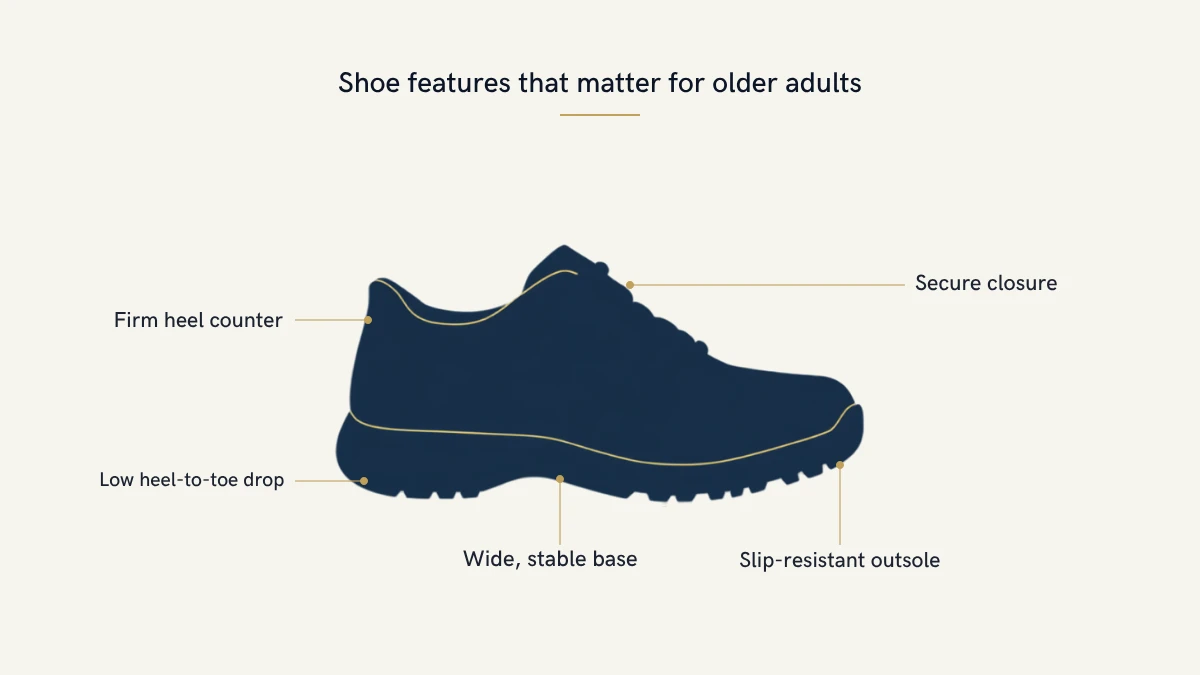
Compare room for the toes, heel fit, sole grip and stability, and a fastening you can manage securely. NHS footwear guidance discusses a low, broad heel, a supportive sole and an adjustable closure while recognizing individual needs. The heel-to-toe drop is one specification, not a universal age-based prescription. HOKA Bondi 9, New Balance 928v3 and the other models below are untested options; their specifications alone do not establish fall protection or suitability for diabetic or neuropathic feet.
Footwear is one part of foot-health and mobility assessment for older adults. The NHS procedure discusses suitable fit, secure fastening and individual needs; it does not establish a retail brand as a treatment or a universally safest design. The Parkinson’s footwear guide gives related context when walking or fastening is difficult.
Still hurting after switching shoes? Footwear helps, but it can’t fix the underlying problem. Takes about a minute, 24/7.
Updated September 2026: pick 3 on this page used to be the Brooks Ghost 16, which Brooks has since replaced twice. It is now the Brooks Ghost 18, written from Brooks’ own current figures — including the drop, which Brooks took from 12 mm to 10 mm two versions ago and which an independent lab measured at 12.2 mm on a pair it cut in half. The HOKA Bondi 9 numbers were corrected in the same pass: the 4 mm drop and 10.8 oz weight this guide used to quote belonged to the Bondi 8.
Where to start
Five places to start, drawn from the top picks further down this page. None has been through our bench yet, so there are no scores here.
- Cushioning design: HOKA Bondi 9Published cushioning, rocker and base construction to compare; not tested clinical outcomes.Women’s — check price Men’s — check price
- Stability construction: New Balance 928v3An APMA Seal of Acceptance shoe with a stability post at the inner heel that controls overpronation.Women’s — check price Men’s — check price
- Long days of walking: Brooks Ghost 18Plush without being mushy, with a stiff heel counter, widths up to 4E and an insole that lifts out for an orthotic.Women’s — check price Men’s — check price
- Depth features: Orthofeet Proven ReliefCheck actual depth and prescribed-device room; no guaranteed fit or diagnosis-based suitability.Search Amazon — paid link
- Laces are a struggle: Skechers GOwalk Arch FitA slip-on construction to compare for secure actual fit; no fall-prevention or condition-specific outcome testing.Women’s — search Amazon Men’s — search Amazon
Paid links: we earn a commission at no extra cost to you, and it never changes what is listed. Who each shoe suits, and who should skip it, is in the top picks. Foot pain that needs a doctor rather than a shoe is listed under warning signs.
Why Feet Change as We Age
Foot shape, skin condition, sensation and mobility differ between people. An age alone does not determine a shoe or an insole prescription.
Foot comfort and fit: This guide has no age-specific measurements establishing the previously stated fat-pad thinning percentage or a cutoff at age 70. Check your actual comfort, fit and skin condition. An age-based average cannot determine the cushioning or support a particular person needs.
Arch shape and shoe size: Recheck the actual foot and shoe fit if it changes. This page has no measurements establishing a universal half-size or full-width change between ages 50 and 65, or that every older adult develops a tendon-related flatfoot.
Mobility and shoe construction: A curved sole is a design feature, not proof that it compensates for a person’s restricted ankle movement. No model-specific gait or treatment testing is available here.
Toe deformities: Bunions (hallux valgus), hammertoes, and overlapping toes become more common and more severe. A narrow or shallow toe box compresses these deformities, causes blisters, calluses, and ulcers (especially in diabetics), and alters gait mechanics by restricting toe-off.
Neuropathy and circulation changes: Peripheral neuropathy (from diabetes, chemotherapy, or idiopathic causes) reduces sensation in the feet, making patients unable to feel when shoes are rubbing or causing pressure injury. Arterial disease reduces healing capacity. Together, these make pressure from ill-fitting shoes genuinely dangerous — small blisters become wounds that won’t heal.
Balance and sole feel: This page does not establish that one foam firmness improves sensory feedback or balance. Fit, construction and a person’s mobility should be assessed together; no named shoe here has demonstrated fall prevention.
What to Look for in Shoes for Seniors
Wide, deep toe box: Toes should never be compressed, pinched, or curled. There should be a full thumb’s width of space between the longest toe and the shoe end. The toe box should be tall enough that hammertoes don’t rub on the top. Avoid pointed or tapered toe boxes entirely.
Sole construction: Compare how the actual shoe feels and supports confident movement. The NHS procedure discusses a firm supportive sole, but it does not establish an EVA or polyurethane hardness cutoff, or validate HOKA or New Balance technologies as treatment winners.
Rocker sole geometry: Some listed models use curved soles, but this guide has no model-specific pressure testing showing a common percentage reduction for older adults. A rocker name or shape does not establish pressure relief or fall prevention. Check the whole shoe and its fit rather than assume all rocker designs have the same effect.
Grip and condition: Inspect outsole wear and the surfaces where the shoe will be used. This guide has not performed slip testing of the listed models, so a rubber or lug label alone cannot guarantee wet-surface traction or quantify a fall-risk change.
Secure, easy closure: Laces are ideal for adjustability but may be difficult for patients with arthritis or neuropathy. Velcro (hook-and-loop) straps allow precise width adjustment and are significantly easier to manage. Slip-ons are convenient but should have a heel counter (stiff back) to prevent the heel from sliding — loose heel fit is a fall risk.
Heel profile and drop: A low, broad heel and heel-to-toe drop describe different aspects of a shoe. The NHS guidance supports checking the whole shoe, fit and fastening; it does not establish a 4–8 mm drop prescription for every older adult. Individual footwear needs, symptoms and balance concerns should guide an assessment.
Heel fit: Check that the heel fits securely and the whole shoe is comfortable. A stiff heel counter does not by itself prove control of pronation or suitability for a tendon condition.
Best Shoes for Seniors 2026: Our Top Picks
Easy-on, cushioned, all-day support for seniors — the Skechers GOwalk Arch Fit pairs a podiatrist-designed footbed with a lightweight, roomy fit. It is pick 5 below, with women’s and men’s links.
1. HOKA Bondi 9 — Best Overall
HOKA Bondi 9
Women’s Bondi 9 — check price on Amazon Men’s Bondi 9 — check price on Amazon · Read our spec review
The HOKA Bondi 9 is listed with multiple width options and attributed manufacturer figures of 297 g (men’s 9), 43/38 mm stack and 5 mm drop. The quoted outside sample measured 9.1 mm drop. Those source and sample differences do not establish stability, toe room for every bunion or hammertoe, or treatment benefit. Check the exact size and width rather than infer clinical suitability from construction.
Comparison limits: The Bondi 9 has not been tested here as a treatment for plantar heel pain, forefoot pain or arthritis. Check the actual fit and any prescribed device; this page does not establish a diagnosis-based best-use assignment.
2. New Balance 928v3 — Stability Features to Compare
New Balance 928v3
Compare the New Balance 928v3’s exact version, fastening, widths and fit. ROLLBAR and ENCAP are manufacturer construction labels; this guide has no prescribing records or fall outcomes showing it is one of the most prescribed shoes or a best treatment for overpronation, Achilles symptoms or hand arthritis. Verify any seal status and specifications on the exact current listing before relying on them.
Comparison limits: The 928v3’s construction does not establish fall prevention or a diagnosis-based prescription. Compare the fastening and actual fit with your mobility needs.
3. Brooks Ghost 18 — Best All-Day Walking Comfort
Brooks Ghost 18
Men’s listing above. Women’s listing on Amazon · Read our spec review
The Brooks Ghost 18 is described with DNA LOFT v3 foam, multiple widths and a removable insole. Its stated 10 mm drop and quoted outside sample’s 12.2 mm drop are different source measurements. This guide has not tested gait stabilization, swelling accommodation or clinical benefit; check the actual shoe and source method.
Comparison limits: No outcome data here establishes the Ghost 18 as best for swelling or sensitive feet, or a categorical exclusion for flatfoot. Compare actual fit and seek assessment for persistent symptoms.
4. Orthofeet Proven Relief — Best for Diabetic and Neuropathic Feet
Orthofeet Proven Relief
Check the exact Orthofeet model, depth, lining and device room on its current listing. This page does not establish category leadership, pressure redistribution, protection from wounds or eligibility for a Medicare benefit. Diabetic or neuropathic footwear needs should be assessed for the individual, including any prescribed device.
Comparison limits: No product-specific evidence here establishes a best shoe for diabetes, neuropathy, previous ulcers or amputation. These needs require individual fitting and assessment rather than a retail best-for label.
5. Skechers GOwalk Arch Fit — Best Slip-On Option
Skechers GOwalk Arch Fit
Women’s GOwalk Arch Fit — search Amazon Men’s GOwalk Arch Fit — search Amazon
For the Skechers GOwalk Arch Fit, check the exact model’s fastening, width and footbed description. A slip-on design or arch-support label does not demonstrate prevention of heel slippage, fall protection or suitability for a diagnosed condition. No original fit or wear records are available here.
Comparison limits: Ease of fastening may be useful to compare, but no documented testing here establishes the GOwalk Arch Fit as best for arthritis or safe for a particular balance problem. Check secure fit in the actual shoe.
6. Vionic Walker — Best for Pronation Control on a Budget
Vionic Walker
Check the Vionic Walker’s exact footbed, dimensions and fastening on its current listing. No original fitting or outcome records here establish superior arch support or that it can replace an individually prescribed orthosis.
Comparison limits: The Vionic Walker is not a validated prescription here for pronation, flatfoot or plantar heel pain, or a proven transition from custom orthotics. Assess the actual pairing if a device has been prescribed.
Best Shoes by Specific Condition
Toe pressure: Check whether the exact shoe leaves enough room and avoids rubbing at the affected area. The listed HOKA and Orthofeet names do not guarantee this fit across sizes and widths.
Toe-box depth: Check for pressure against the top as well as the sides. A listed width or model name does not establish enough depth for every foot.
Plantar heel pain: This page has not validated a Bondi/PowerStep pairing or a Brooks alternative as a treatment. Shoe and insole choices depend on the assessed problem and actual fit.
Reduced sensation or diabetes: The NHS procedure advises attention to skin and pressure because poor fit may not feel uncomfortable. Check footwear and any prescribed device for the individual rather than assuming that a brand label prevents injury.
Arthritis: This page does not establish rocker shape as the primary treatment feature or a universally best retail technology. The appropriate shoe or device depends on the assessed joint problem and actual fit.
Changing foot volume: Compare the actual fit and adjustable fastening. Persistent or new swelling needs assessment; this page does not prescribe removing an insole or name a universal upper design as treatment.
Our Top Recommended Products
Dr. Tom’s Senior Footwear Essentials
1. HOKA Bondi 9The Bondi 9 construction and quoted outside hardness value describe a recorded sample. They do not establish what a particular person with heel-pad discomfort needs. Related heel-pad context →
Women’s Bondi 9 — check price on Amazon Men’s Bondi 9 — check price on Amazon 2. New Balance 928v3 (Wide/Extra Wide)New Balance 928v3: compare the exact current seal status, ROLLBAR construction, fastening and widths. No original prescribing notes or fall-prevention outcome records are available here.
Check Price on Amazon (men’s) → 3. PowerStep Pinnacle GREEN InsolesA PowerStep Pinnacle pairing needs enough shoe space and an actual fit check. This page has not tested fit across named shoes or demonstrated added treatment benefit for plantar heel pain, flatfoot or fatigue.
Check Price on Amazon → (paid link) 4. Thorlo Padded Crew Socks (Diabetic/Walker)Compare the Thorlo sock’s fit and labelled construction. This guide has no product-specific outcome testing establishing extra shock absorption, reduced blister risk or protection of circulation. Reduced sensation or circulation concerns need individual assessment.
Men’s Thorlos walking socks — check price on Amazon →Warning Signs: When Foot Pain in Seniors Needs Medical Evaluation
⚠️ See a podiatrist promptly if you or a family member notice:
- A sore, blister or foot wound with diabetes: CDC guidance advises contacting your regular doctor or foot doctor about these symptoms. Do not rely on a shoe change to assess the wound.
- New or worsening pain that limits walking: Seek an individual assessment rather than assume one shoe or insole will resolve the cause.
- A change in foot color or temperature: CDC includes these changes among reasons for people with diabetes to see their doctor. This page cannot determine the cause; the Charcot-foot guide gives related context.
- A painful, ingrown or changed toenail: Ask a qualified clinician about the change, particularly if you have diabetes or impaired sensation or circulation.
- New foot or ankle pain after a fall: Seek an individual assessment. This guide cannot diagnose the injury or decide whether imaging is needed.
Dr. Tom’s Insole Upgrade — Works With Any Shoe
The linked inserts are products to compare, not a mandatory second treatment step. No dispensing records support a most-recommended-in-clinic claim, and a preset retail insert does not establish suitability for a particular foot.
PowerStep Pinnacle
Retail insert construction to compare. Check the exact model and actual shoe space; fit is not guaranteed.
Shop PowerStep on Amazon → (paid link)
CURREX RunPro
Compare the exact insert profile and fit in the actual shoe; no clinical result or toe-room guarantee is established here.
Shop CURREX RunPro on Amazon →
Compression Socks (15–20 mmHg) — Dr. Tom’s Pick
The linked SB SOX listing describes a 15–20 mmHg three-pack. This guide has no prescribing or outcome records for it and does not establish that pressure as appropriate for everyone with swelling or prolonged standing. Discuss suitability with a clinician, especially if you have arterial disease or reduced sensation.
Shop SB SOX 15–20 mmHg socks (3 pairs, choose your size) on Amazon → (paid link)Frequently Asked Questions
Should seniors wear shoes with arch support or flat shoes?
There is no one arch-support prescription established here for all older adults. Compare fit, comfort, fastening and stability in the actual shoe. A high or low arch label does not select an insole on its own. The NHS footwear guidance emphasizes individual needs and assessment of foot-health or mobility problems.
How often should seniors replace their shoes?
Inspect your shoes for wear, poor grip, damaged fastening, distortion or a change in fit and comfort. This guide has no wear-test evidence validating a universal mileage, month limit or thumb-compression test. A shoe that looks intact may still need reassessment, but the replacement decision should reflect its actual condition and use.
Are rocker-bottom shoes safe for seniors?
This guide has not demonstrated that a named rocker shoe is safe or beneficial for every older adult. Curvature alone does not determine suitability. Check the actual shoe, fit and how confidently you move in it; balance problems or difficulty with a change warrant an individual assessment.
Should seniors wear shoes inside the house?
NHS guidance includes indoor footwear in falls-risk assessment and highlights secure fit and fastening. This page has not established when most indoor falls occur, or that a particular slipper prevents falls or treats pain. Indoor footwear should fit the person and setting, with extra attention to skin and pressure if sensation is reduced.
The Bottom Line
These pages compare published construction information, not a clinical ranking of shoes or an age-based treatment prescription. No original outcomes here establish the HOKA Bondi 9, New Balance 928v3, PowerStep Pinnacle or Orthofeet as category standards or proven treatments. Compare the exact fit and evidence limits.
An individual assessment can help identify foot-health, mobility or fitting needs. This publication does not hold clinic assessment records for the named products; it compares published sources and should not be read as a documented patient case series.
What the research actually supports — and where it stops
A 2024 review in Annals of Geriatric Medicine and Research gathered the footwear research on falls in people over 60 and came out with a short, specific list. Heels of 4 cm or lower improve gait stability; a treaded outsole that disperses liquid and debris beats a smooth one for slip resistance; a higher collar around the ankle helps balance; and secure fixation matters. Backless and loose-fitting slippers were singled out as carrying a clearly elevated risk compared with an enclosed shoe that fastens.
The authors are equally clear about the gaps, and they are worth repeating because they change how confidently anyone should speak here. Slip-resistance research in older adults is limited, because testing slips safely in this population is difficult. Findings on insole hardness and balance actively conflict. There is very little work isolating sole hardness on its own. And the evidence on anti-slip socks in hospital settings is inconclusive.
So the recommendations on this page are drawn from the best available evidence rather than from settled science, and the single best-supported line on it is the least commercial one: wear a proper fastened shoe indoors instead of a backless slipper. That costs nothing beyond the habit, and it is the change with the clearest support behind it.
Source: Kim I-J, Hegazy F. Enhancing Footwear Safety for Fall Prevention in Older Adults: A Comprehensive Review of Design Features. Annals of Geriatric Medicine and Research, 2024;28(2):121–133. doi:10.4235/agmr.23.0167
The numbers, side by side
Every shoe named above has a specification page on this site. Here are the figures in one place, so you can see how the picks differ before you read the reasoning for each one.
| Shoe | Heel stack | Forefoot stack | Drop | Weight |
|---|---|---|---|---|
| New Balance 928v3 | — | — | — | — |
| Brooks Ghost 18 | 36 mm | 26 mm | 10 mm | 289 g |
| HOKA Bondi 9 | 43 mm | 38 mm | 5 mm | 297 g |
| Skechers Hands Free Slip-ins | — | — | — | — |
Manufacturer-stated figures from our specification library, each attributed on the shoe’s own page. An em dash means the brand has not published that number and we have not found a sourced one. None of these is a measurement we have taken ourselves.
The heel-to-toe drop chart compares manufacturer statements and outside samples. A difference without matched size, version and measurement method does not establish that the stated forefoot number is wrong or universally missing material.
Clarification (8 October 2026): Removed unsourced age and pressure percentages, universal shoe and insole rules, clinic-prescribing stories and untested fall-prevention, lifespan and diagnosis-to-brand claims. Clarified source-based provenance, purchase limits and individual assessment needs.
Recently reviewed
Individual shoe pages state their evidence tier, published measurements and who should skip them.
Saucony Endorphin Speed 5
Spec AnalysisLight plated neutral trainer. Saucony publishes both stack heights and they match its 8 mm drop — not yet tested.
HOKA Mach 6
Spec AnalysisLower, firmer neutral HOKA. HOKA publishes a 5 mm drop and neither stack height — not yet tested.
ASICS Novablast 5
Spec AnalysisBouncy high-stack neutral. ASICS publishes an 8 mm drop and neither stack height — not yet tested.
Our funding and evidence policy
We earn affiliate commissions from qualifying purchases. Our policy is to assess published evidence and fit needs rather than rank products by commission rate. Current reviews are specification analyses; see our method for their limits.