
Best Tennis Shoes for Plantar Fasciitis: Everyday Sneakers vs Real Court Shoes (2026)
Spec analysis — not yet tested · Tom Biernacki, DPM, FACFAS · September 2026
Written and medically reviewed by Dr. Tom Biernacki, DPM, FACFAS · Last reviewed 15 October 2026
We earn a commission if you buy through links on this page, including Amazon links paid by brand partners through Levanta, at no cost to you. As an Amazon Associate I earn from qualifying purchases. How we make money
On this page
Correction (8 October 2026): Removed unsupported clinical winners, mandatory insert and recovery claims; corrected stock-liner clearance reasoning and clarified outside measurements. These are editorial source corrections, not product tests or clinician-review sign-off. ACFAS heel-pain guidance; USTA shoe-fit discussion; 2023 clinical guideline.
Spec analysis — not yet tested. No shoe on this page has been through the Podiatrist Tested bench. Every figure is the manufacturer’s or an independent lab’s, and attributed as such. No scores and no seal here on purpose: the listed numbers come from attributed outside sources. Our scoring ideas are unvalidated proposals, and no original product photos, measurements or wear-test records are available for these shoes. Editorial policy →
“Tennis shoes” can mean everyday sneakers or footwear for playing tennis. This page compares both uses, with separate construction and fit questions. It has no search-population study or clinical trial showing that one category is the opposite of what a painful foot needs.
If you meant everyday sneakers, compare the shortlist’s attributed specifications, actual width and comfort. Heel-to-toe drop is one feature, not a proven 8–10 mm treatment requirement for plantar fasciitis.
If you play tennis, see the court section for seven attributed outside laboratory samples. Their dimensions describe the sampled shoes rather than promising a better clinical outcome.
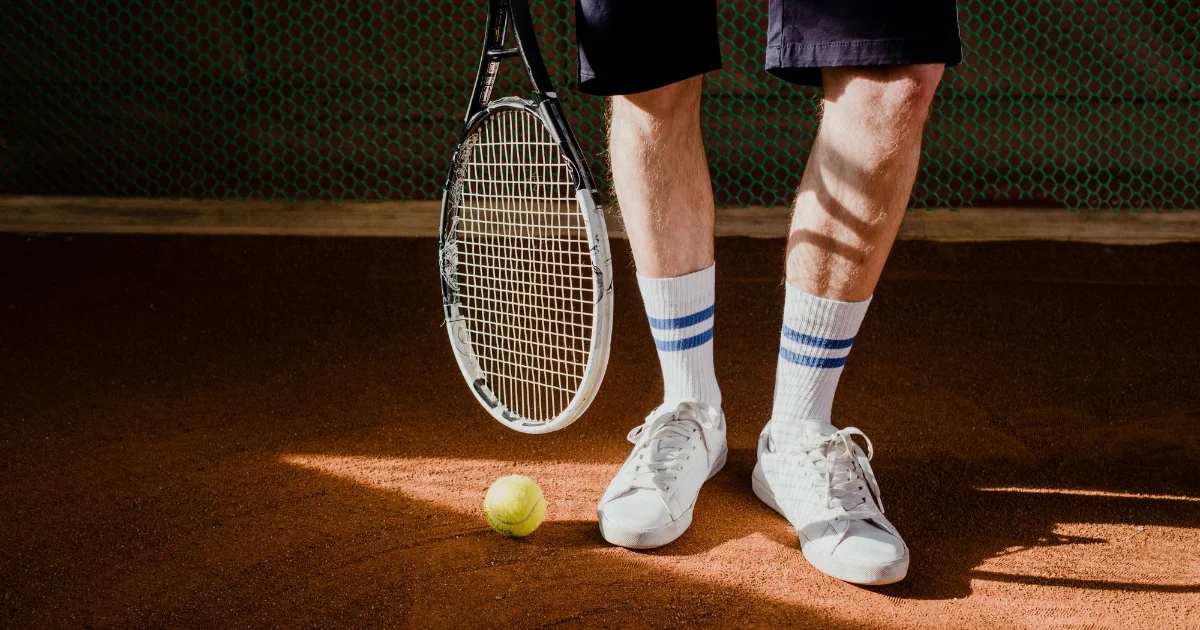
Part one: everyday sneakers
If “tennis shoes” means everyday sneakers, compare actual fit, activity and the attributed construction. Heel-to-toe drop, stack and weight are useful product descriptors; no single box number establishes the best treatment shoe.
A slightly raised heel and supportive footwear are discussed in ACFAS patient guidance as part of care. That general advice does not establish a universal millimetre range or prove that a particular retail shoe relieves an individual’s pain. The shoe-anatomy guide explains construction terms. Heel pain has several possible causes, and persistent symptoms need assessment.
| Shoe | Stated drop | Stated weight | MSRP | Check price |
|---|---|---|---|---|
| KURU ATOM 2 10 mm manufacturer-stated drop; no activity or treatment outcome established | 10 mm | 371 g | $169 | Men’s at KURUNot a paid link. This product was unavailable on Amazon when we checked in September 2026, so the button goes to KURU’s own store. Women’s at KURUNot a paid link. This product was unavailable on Amazon when we checked in September 2026, so the button goes to KURU’s own store. |
| ASICS GEL-CUMULUS 28 8 mm stated drop; lowest listed MSRP in this table | 8 mm | 259 g | $145 | Men’sPaid link. We earn a commission at no extra cost to you; commissions never influence a score, a ranking or the seal. Price and availability change, so check the listing. Women’sPaid link. We earn a commission at no extra cost to you; commissions never influence a score, a ranking or the seal. Price and availability change, so check the listing. |
| ASICS GT-2000 15 Lightest listed weight in this table; published 4E option | 8 mm | 252 g | $150 | Men’sPaid link. We earn a commission at no extra cost to you; commissions never influence a score, a ranking or the seal. Price and availability change, so check the listing. Women’sPaid link. We earn a commission at no extra cost to you; commissions never influence a score, a ranking or the seal. Price and availability change, so check the listing. |
| ASICS GEL-NIMBUS 28 Listed 8 mm drop; no comparative softness test by this site | 8 mm | 281 g | $170 | Men’sPaid link. We earn a commission at no extra cost to you; commissions never influence a score, a ranking or the seal. Price and availability change, so check the listing. Women’sPaid link. We earn a commission at no extra cost to you; commissions never influence a score, a ranking or the seal. Price and availability change, so check the listing. |
| HOKA Arahi 8 Reported rocker construction; no all-day walking comparison by this site | 8 mm | 278 g | $150 | Men’sPaid link. We earn a commission at no extra cost to you; commissions never influence a score, a ranking or the seal. Price and availability change, so check the listing. Women’sPaid link. We earn a commission at no extra cost to you; commissions never influence a score, a ranking or the seal. Price and availability change, so check the listing. |
Amazon affiliate links — we earn a commission at no extra cost to you. Commission rates differ between products and we do not rank by commission rate. How we stay independent →
If you want these picks broken down properly, the walking guide covers the same shoes for people on their feet all day, and the running guide covers them for mileage. This page exists because a lot of people searching “tennis shoes” are not thinking about either.
Stated and outside-measured drop can differ
Independent laboratory measurements and manufacturer-stated figures may differ because of sample, size or measurement methods. The table reports both with source labels; a discrepancy alone does not prove an inaccurate or dishonest manufacturer specification.
| Shoe | Stated drop | Lab-measured | Difference |
|---|---|---|---|
| HOKA Transport 2 | 5 mm | 11.2 mm | +6.2 mm |
| HOKA Bondi 9 | 5 mm | 9.1 mm | +4.1 mm |
| Brooks Ghost 17 | 10 mm | 10.4 mm | +0.4 mm |
Lab figures: RunRepeat. Stated figures: the manufacturers. None measured by us.
The table lists both HOKA models at a stated 5 mm, with outside sample measurements of 11.2 and 9.1 mm, and Ghost 17 at stated 10 mm versus measured 10.4 mm. These differences do not rank clinical benefit or manufacturer honesty.
Part two: if you actually play tennis
This section distinguishes court footwear from everyday sneakers and reports seven attributed laboratory samples. Their measurements correct an overly broad flat-shoe description; they do not establish clinical superiority or a recovery outcome.
Court footwear is designed for lateral movement and surface grip. In these seven outside samples, median measured drop is 11.0 mm and the lowest is 8.6 mm; six heel counters score 4 or 5 of 5, and all seven liners are removable. The drop chart and basketball comparison report other samples. These are construction data, not clinical tests showing plantar-fasciitis relief.
Tennis involves split steps, lunges and rapid changes of direction. Those activity demands are relevant to comfort and footwear fit, but this page does not measure an individual’s plantar-fascia loading or establish that a harder court or one shoe feature causes their pain.
We still have not benched a court shoe. No tennis-specific model has been through the Podiatrist Tested protocol, and no score or seal has been issued; the scoring programme remains an unvalidated proposal. What has changed is that we can now show you somebody else’s measurements, attributed to them, instead of showing you nothing — which is the standard the rest of this site already uses for a shoe we have not tested ourselves.

What the lab measured in seven court shoes
Every figure below is RunRepeat’s, read in September 2026, with sources attributed below; no universal claim about every brand’s publications is made. Five of the seven appear on that lab’s own plantar-fasciitis shortlist, which is a selection you should know about — but the two that are there for other reasons, the ASICS Court FF 3 and the adidas Barricade 14, measure 10.4 and 11.9 mm of drop, right in the middle of the group.
| Court shoe | Heel stack mm | Drop mm | Heel counter of 5 | Shock absorption SA, heel | Weight g | Insole mm | MSRP |
|---|---|---|---|---|---|---|---|
| New Balance Fresh Foam X CT-Rally v2 | 33.3 | 13.1 | 5/5 | 116 | 405 | 5.5 | $150 |
| ASICS Court FF 3 | 32.2 | 10.4 | 4/5 | 100 | 406 | 5.0 | $170 |
| Mizuno Wave Enforce Tour 2 | 31.0 | 10.9 | 5/5 | 105 | 376 | 4.1 | $150 |
| ASICS Solution Speed FF 4 | 30.9 | 11.0 | 4/5 | 113 | 337 | 5.0 | $160 |
| adidas Defiant Speed 2 | 28.8 | 11.8 | 4/5 | 105 | 347 | 7.2 | $120 |
| Nike Vapor Pro 3 | 28.6 | 8.6 | 3/5 | 104 | 383 | 4.5 | $130 |
| adidas Barricade 14 | 26.3 | 11.9 | 5/5 | 89 | 380 | 6.1 | $160 |
Every figure in this table is RunRepeat‘s, cut-in-half lab measurements, read September 2026. Insole is the sockliner’s thickness; all seven lift out. Higher SA means more shock absorbed at the heel. Heel counter is scored 1–5, higher being stiffer. Prices are list and move constantly.
The CT-Rally v2 has the largest listed heel stack, drop and heel shock-absorption figure in these samples, while Vapor Pro 3 has the smallest drop and lowest heel-counter score. These are useful descriptive differences, not evidence that one treats plantar fasciitis better or that the other should be excluded for the diagnosis.
What to look for in a court shoe
- Compare attributed heel height and drop. The seven samples span 26.3–33.3 mm heel stack and 8.6–13.1 mm drop. The 4.5 mm drop range does not establish that more heel is always better for a painful foot; check actual comfort and clinical needs.
- Check device clearance if needed. The seven sampled liners are removable and 4.1–7.2 mm thick. Liner thickness alone does not establish total internal volume or the space remaining after removal. Test the actual prescribed device-and-shoe fit; a fixed liner does not by itself make a shoe unimprovable.
- Compare heel-counter construction. The outside lab rates six samples 4 or 5 of 5 and Vapor Pro 3 at 3. Those physical scores do not prove an individual plantar-fascia load, treatment benefit or injury risk.
- Use footwear suited to the court surface and actual grip needs. Surface labels alone do not quantify an individual’s injury risk or make a particular stopping pattern safe.
- Check actual toe clearance. Four outside court samples have reported big-toe widths of 66.2–69.4 mm. Those location-specific measurements do not establish total volume, every available width version or a stability benefit from a snug shoe. The toe-box comparison explains related fit limits.
Using this chart. Reproduce it wherever you like — an article, a newsletter, a lecture slide, a forum post — please preserve the source labels; attribution to Podiatrist Tested is welcome but a link is not required. No permission needed, no fee, and you are welcome to host the file yourself.
Credit line to copy: Chart: Podiatrist Tested — podiatristtested.com/best-tennis-shoes-for-plantar-fasciitis/
The measurements are RunRepeat’s and are credited to them on the chart, and facts belong to nobody. We claim nothing over the numbers themselves, only over the chart. If you want a different crop, a print-resolution file, or the underlying table as a spreadsheet, ask us and we will send it.
Fit and activity questions to discuss
Footwear, device fit and activity tolerance can be discussed as parts of care. The following are considerations, not reported clinic outcomes or a universal three-step success protocol.
- Consider an orthosis where appropriate. The 2023 guideline supports orthoses as part of combined care, rather than an isolated short-term treatment. It does not establish a mandatory device or a highest-value retail insert for every tennis player. The insole comparisons explain published shelf options.
- Review footwear used outside court time. Consider actual comfort and symptoms throughout the day; a fixed number of hours or barefoot exposure alone does not identify what is sustaining an individual’s heel pain.
- Review activity tolerance. If activity worsens symptoms, discuss an appropriate adjustment with your clinician. Morning symptoms are useful information, but a worse next morning alone is not a validated diagnostic threshold or proof of the exact cause.
For tennis, check actual lateral support, grip, fit and surface compatibility. A running-shoe category does not, by itself, quantify ankle-injury risk or establish how long an injury will keep someone off court. USTA’s medical-provider discussion emphasizes individual shoe features and fit.
Removable liners and optional device-fit checks
Removable liners can permit a prescribed device to be fitted, but an insert is not required for every player. This page has no records supporting a clinic’s most-used insert or comparative patient benefit. PowerStep Pinnacle — paid link is a published-source option, not a proven tennis-treatment winner; verify the current price, size and actual fit.
One thing specific to tennis. A court shoe is cut close for a reason, so swapping a thin factory liner for a thicker device can tighten the fit and change how the shoe holds you on a hard lateral push. Try it at practice pace before you trust it in a match.
What no shoe will fix
Footwear is one part of care. Stretching, activity adjustment and other treatments may be considered according to assessment; a retail shoe is not proven here to speed recovery or make every other intervention work faster. Heel pain has several possible causes, including stress fracture and nerve irritation. Seek assessment for persistent or worsening symptoms rather than using response to heel drop to diagnose the cause.
Questions I get asked
Are tennis shoes bad for plantar fasciitis?
This page does not establish that a whole shoe category is good or bad for the diagnosis. The seven attributed court samples have a median 11.0 mm drop, mostly firm heel counters and removable liners; those construction data are not clinical outcomes. Compare actual fit and activity needs alongside care for your heel pain.
Can I wear running shoes to play tennis?
Check the specific shoe’s lateral support, surface grip and fit rather than relying only on a running or tennis label. USTA’s medical-provider discussion allows feature-based individual choice; this page does not quantify ankle-injury risk or establish a universal running-shoe exclusion.
What heel drop should I look for?
No universal numerical drop range is established here as a treatment for plantar fasciitis. ACFAS discusses supportive footwear and a slightly raised heel in general care, but that does not prove a particular 8–12 mm range or retail model. Distinguish manufacturer-stated and outside sample measurements.
Have you actually tested these shoes?
No original product photos, measurements or wear-test records are available for the shoes on this page. The tables attribute figures to manufacturers or a named outside laboratory. No score or seal has been issued; any future own test should publish its methods, records and limitations.
- RunRepeat, cut-in-half laboratory reviews of seven tennis shoes — New Balance Fresh Foam X CT-Rally v2, ASICS Court FF 3, Mizuno Wave Enforce Tour 2, ASICS Solution Speed FF 4, adidas Defiant Speed 2, Nike Vapor Pro 3 and adidas Barricade 14 (heel and forefoot stack, drop, heel-counter stiffness, shock absorption, midsole durometer, weight, insole thickness and removability, MSRP), read September 2026.
- RunRepeat, cut-in-half laboratory reviews of seven basketball shoes, used for the comparison in the chart above — the model-by-model figures are on our basketball guide, read September 2026.
- Podiatrist Tested, heel-to-toe drop chart — the measured running-shoe drops used in the chart above, themselves attributed to the same laboratory.
- Manufacturers’ own product pages for the everyday-sneaker shortlist in Part One: KURU, ASICS and HOKA, read September 2026. Those are stated specifications, not measurements, and are labelled as such in the table.
Affiliate disclosure. Some links on this page are Amazon affiliate links and we earn a commission if you buy through them, at no extra cost to you. We do not rank by commission rate. The court section includes a paid PowerStep link. Its court-shoe table reports attributed outside measurements; none is a physical test by this site. How we stay independent →
Not medical advice. This page is general education and does not create a doctor–patient relationship or substitute for examination and diagnosis.
Reviews for Plantar Fasciitis
Individual shoe pages state their evidence tier, published measurements and who should skip them.
Dansko XP 2.0
Spec AnalysisOccupational clog with a removable dual-density footbed and slip-resistant outsole — not yet tested.
Orthofeet Coral
Spec AnalysisExtra depth, published quarter-inch removable insole, widths A to 4E depending on colour, 15.7 mm drop — not yet tested.
Skechers GO WALK Arch Fit 2.0
Spec AnalysisRemovable Arch Fit insole, hands-free entry, APMA Seal on some styles — not yet tested.
Our funding and evidence policy
We earn affiliate commissions from qualifying purchases. Our policy is to assess published evidence and fit needs rather than rank products by commission rate. Current reviews are specification analyses; see our method for their limits.